
Applications & possibilities

One knowledge foundation.
Many kinds of work.

The same medical evidence can inform an assessment, an economic model, a research synthesis, or a conversation. Nyx is being built to keep that work connected to its sources.

See current applications

Six possible directions for collaboration. Select an area to explore a starting point.

Projects we could shape together

Start with the work
your team needs to do.

These are possibilities to explore with a partner. Together, we would define the sources, methods, deliverable, and review needed for a useful first project.

Source passages connect by a rose thread to an open assessment dossier, with an empty space flagged for a remaining question.
An assessment takes shape. Its sources and open questions stay visible.

01 / A possibility to explore

Health technology assessment

What if the evidence foundation was ready when the assessment began?

Explore a clinical evidence foundation for a defined assessment, with findings, source passages, uncertainties, and open questions connected.

A possible starting point

A reviewable account of the studies, with a clear comparison of what a later submission adds.

The assessment team sets the question and retains its appraisal and recommendation responsibilities.

Discuss an assessment

A folded paper path branches from a source folio into three possible futures. A hand adjusts one of the assumption cards along the way.
A shared starting point. Different assumptions, different possible futures.

02 / A possibility to explore

Health economic evaluation

Which parts of the model come from evidence, and which depend on assumptions?

Explore how structured evidence could support economic evaluation, linking reported outcomes and resource use to the inputs a modelling team needs.

A possible starting point

A source-linked input set that distinguishes observations, extrapolations, and unresolved gaps.

Model structure, calculations, and assumptions require their own specification and review.

Discuss an economic evaluation
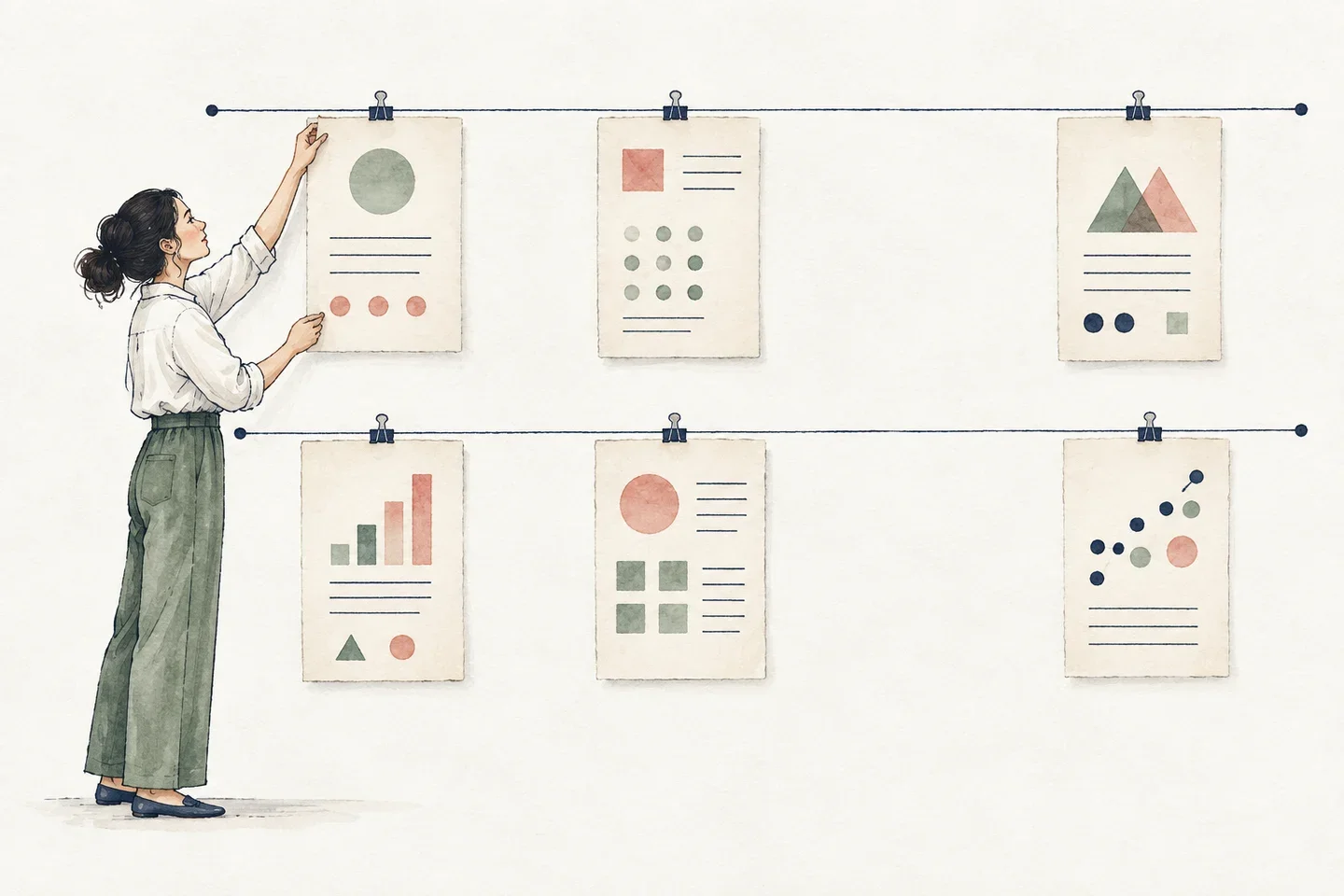
A researcher aligns distinct study cards on a comparison wall, with differences and gaps between the cards still visible.
Bring the studies into view without losing what makes them different.

03 / A possibility to explore

Systematic reviews & meta-analysis

What could your team do with the study evidence already organised for review?

Explore support for study selection, extraction, appraisal, and synthesis, keeping definitions and differences between studies visible.

A possible starting point

An inspectable study record with source links, inclusion decisions, and questions about comparability.

The review protocol and any statistical pooling need explicit methods and independent scrutiny.

Discuss a review or synthesis
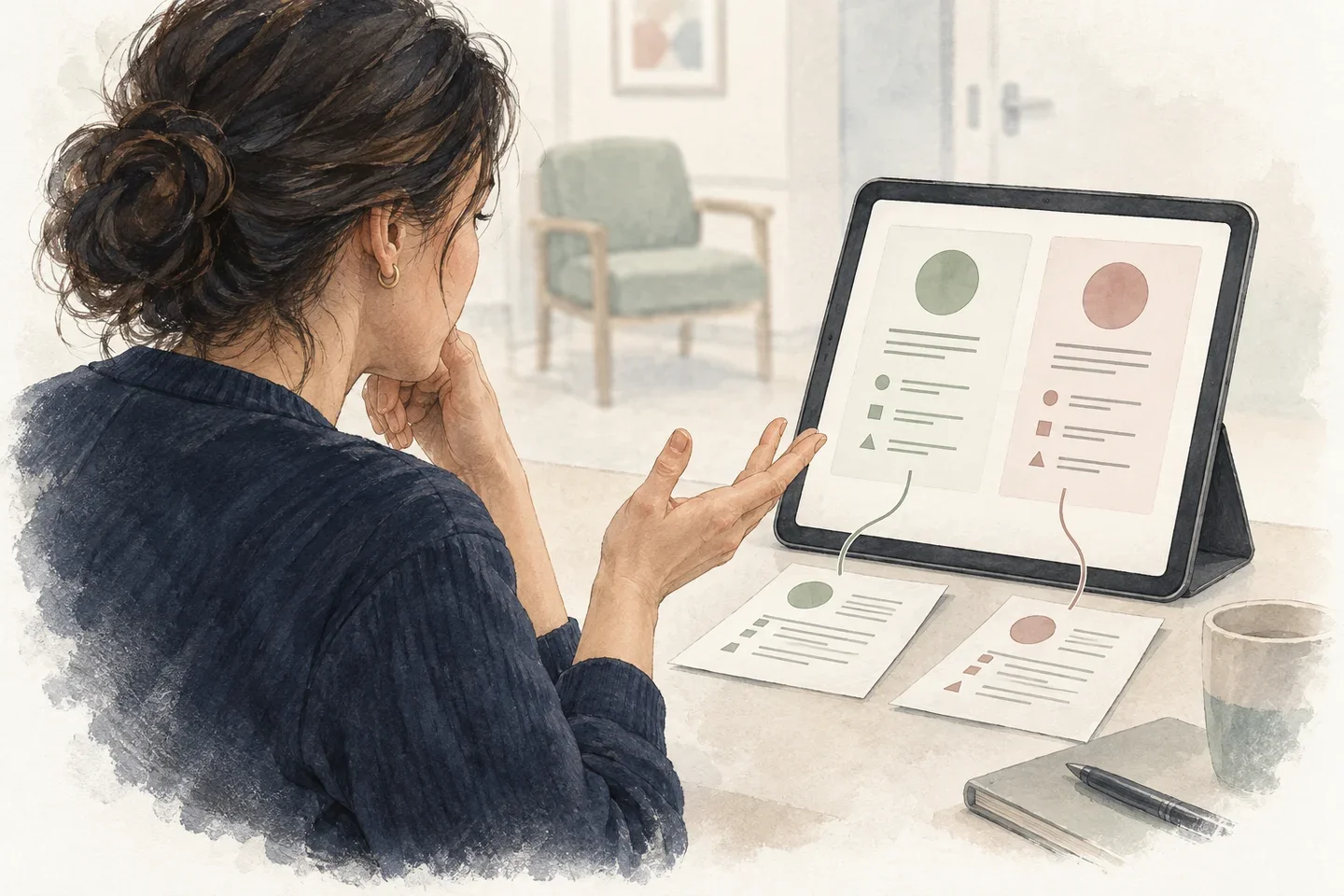
Over a clinician’s shoulder, two unselected options on an illustrative tablet remain connected to their source papers.
The evidence is available to examine. The judgment remains with the clinician.

05 / A possibility to explore

Clinical applications

What should a clinician be able to examine before using an answer?

Explore interfaces that bring the evidence, assumptions, uncertainty, and tradeoffs into the clinician’s view.

A possible starting point

A clinician can follow an answer back to the study population, source passage, and reasoning behind it.

The clinician remains the decision-maker. Our current oncology applications are listed separately below with their current status.

Discuss a clinical application
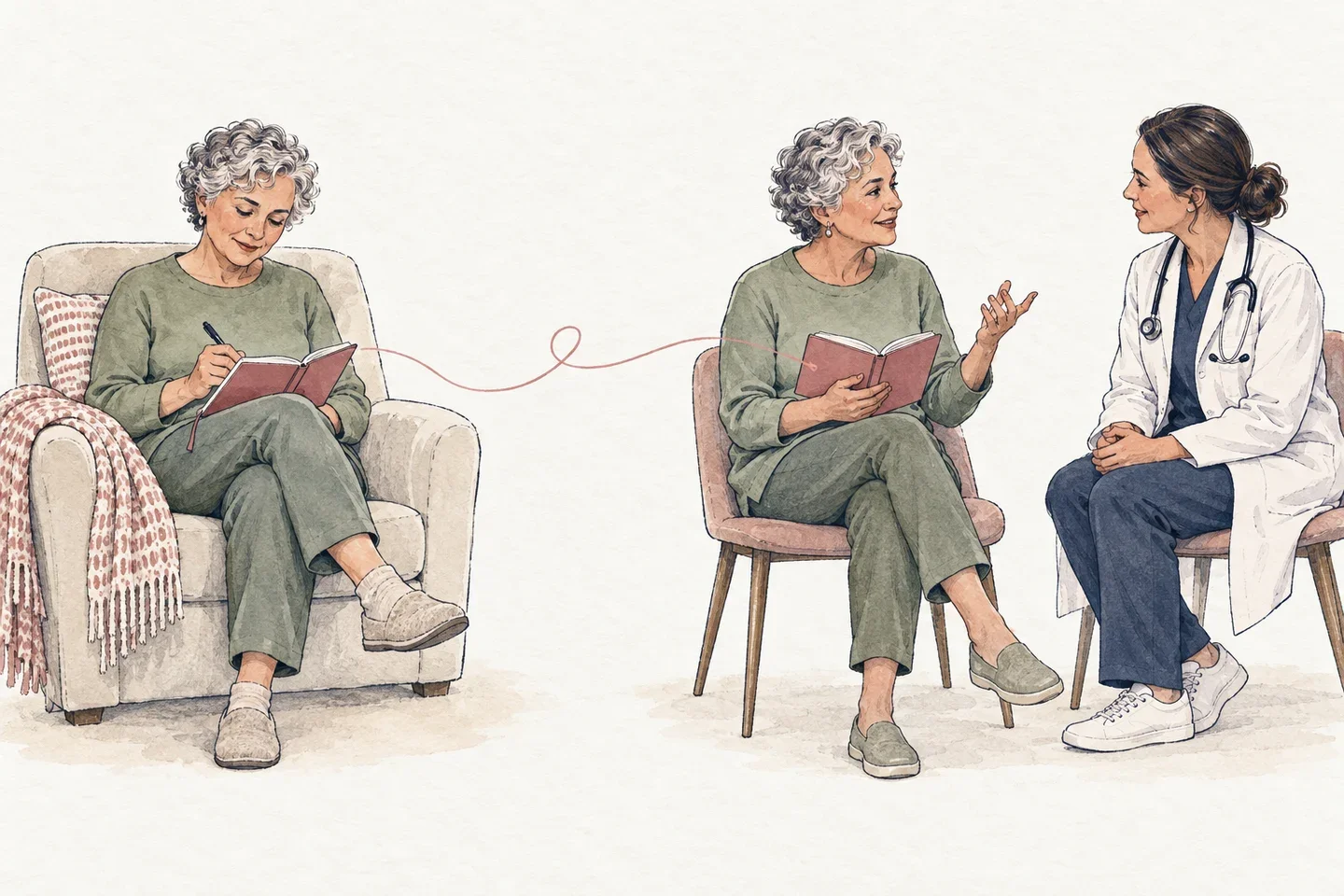
An older adult writes in a rose notebook at home, then brings the same notebook into a conversation with a listening clinician.
A question prepared at home becomes part of the conversation.

06 / A possibility to explore

Patient-facing applications

How could someone arrive at their next appointment with better questions?

Explore explanations that help people understand medical evidence, recognise uncertainty, and prepare for conversations with their care team.

A possible starting point

An understandable account of what the evidence addresses, with questions a person can bring to their clinician.

A patient-facing application supports communication with the care team and does not provide individual medical advice.

Discuss a patient-facing application

Current applications

Our oncology applications.

Kesis Clinical for kidney cancer and gastrointestinal stromal tumours (GIST) is live online. Kidney Cancer is available online and remains in clinical testing; GIST is available for general use. Kesis Companion remains in testing.

Kesis Clinical — Kidney Cancer

A clinician-facing application currently being used to test how governed clinical knowledge developed through Nyx can support complex kidney cancer decisions.

Open Kidney Cancer appPrimary application example

Kesis Clinical — GIST

A clinician-facing application for gastrointestinal stromal tumour decision support.

Open GIST app

Kesis Companion — Breast Cancer

A patient-facing application in testing, designed to express governed clinical knowledge in a form appropriate for patients.

What the testing labels mean

“In clinical testing” and “In testing” describe the current testing status only. They do not establish commercial availability, regulatory authorization, clinical validation, routine patient-care deployment, or demonstrated clinical benefit.

A closer look at clinical applications

Make the reasoning available for review.

A useful interface connects a clinical question with evidence, assumptions, and tradeoffs. This conceptual example illustrates that relationship.

Conceptual interface

An illustration of a clinician’s review. Not a product screenshot or a treatment recommendation.

Evidence for a clinical questionIllustrative
Decision contextWhat does the evidence help us understand?

The clinician defines the question and considers whether the evidence applies.

  1. 1

    Examine the evidence

    Finding → study population → source passage

    Follow the source
  2. 2

    Question the assumptions

    What was observed? What remains uncertain?

    Keep assumptions visible
    Inspect the reasoning
  3. 3

    Discuss the tradeoffs

    The clinician considers options, uncertainty, and patient priorities.

    Support the conversation
Explore how a finding stays connected to its source

The next application could start with your question

What could we build
around your evidence?

Bring a defined problem and the people who need to use the answer. We can work out a useful place to begin.

Bring us a project